TL;DR: Beginners should start with patterns 20×20 to 40×40 pegs using 6 colors or fewer — big enough to look like something, small enough to finish in one sitting. Below are 25 beginner-friendly ideas in five categories, every one makeable with the free pattern editor. Print, bead, iron, done.
The hardest part of a first bead project isn’t the beading — it’s picking a pattern that won’t defeat you. Too big and it sits half-finished in a drawer. Too many colors and you spend more time sorting than placing. This list is the answer we give every beginner: 25 small, simple, genuinely good-looking patterns, grouped by theme, with the size and color count that makes each one forgiving.
Quick picks: the 5 best first patterns
If you want exactly one recommendation, start here. These five are the patterns we hand to every first-timer — small, few colors, and unmistakably cute when finished:
- Simple cat face (about 20×20, 4 colors) — the classic first pattern for a reason
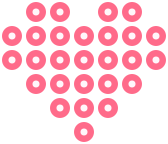
- Heart (about 15×15, 2 colors) — fifteen minutes, start to ironed
- Mushroom (about 20×25, 4 colors) — reads perfectly at bead scale
- Star (about 20×20, 2 colors) — teaches you diagonal edges early
- Small flower (about 25×25, 5 colors) — the gateway to every floral pattern
Animals (5 patterns)
Animal faces are the most forgiving beginner subjects: two eyes, a nose, and a silhouette do all the work.
- Cat face — 20×20, 4 colors. Pointed ears and whisker pixels are all you need.
- Dog face — 22×22, 4 colors. Floppy ears made from two-pixel steps.
- Bunny — 25×30, 5 colors. Tall ears make it instantly recognizable.
- Penguin — 20×28, 4 colors. A black blob, a white belly, an orange beak — done.
- Fish — 25×20, 4 colors. Side profile means no symmetry stress.
Ready to go beyond faces? Our pet pattern guide shows how to turn a photo of your own animal into a bead portrait.
Food & drinks (5 patterns)
- Apple — 20×22, 3 colors. A red blob with a brown stem and one green leaf.
- Watermelon slice — 25×18, 4 colors. The seed pixels are the fun part.
- Ice cream cone — 18×30, 5 colors. Two scoops, one cone, zero skill required.
- Pizza slice — 25×25, 5 colors. Toppings are just red and green dots.
- Coffee cup — 22×20, 3 colors. The steam swirl is optional and adorable.
Pixel & retro style (5 patterns)
Beads are pixels, so pixel-style designs are the most natural fit — and the most forgiving, because chunky shapes are the whole aesthetic. All of these are original generic designs, no borrowed characters:
- Space invader-style alien — 22×18, 2 colors. The single most iconic bead shape there is.
- Pixel heart — 15×14, 2 colors. Life-bar red, or any color you like.
- Treasure chest — 25×22, 5 colors. Gold trim on brown reads instantly.
- Sword — 12×35, 4 colors. Tall and thin — great for learning narrow builds.
- Potion bottle — 18×25, 4 colors. One bright liquid color against dark glass.
Seasonal (5 patterns)
- Snowflake — 25×25, 2 colors. Six-fold symmetry hides small mistakes beautifully.
- Pumpkin — 25×22, 3 colors. Orange body, green stem, optional triangle eyes.
- Christmas tree — 25×30, 4 colors. Green triangle, brown trunk, colored dot ornaments.
- Easter egg — 20×28, 5 colors. Zigzag and dot stripes, no two alike.
- Sunflower — 25×25, 4 colors. Brown center, yellow petals, green leaves.
First multi-board challenge (5 patterns)
Once two or three small pieces have gone well, these stretch you onto a full 29×29 board or a two-board layout — still simple shapes, just bigger:
- Rainbow — 29×29, 6 colors. One stripe per color, perfect for using up mixed bags.
- House — 29×29, 5 colors. Square walls, triangle roof, one yellow window.
- Butterfly — 29×29, 5 colors. Symmetrical wings teach you to count from the center.
- Cartoon avatar of yourself — 29×29, 10 colors. Use the avatar maker to convert a selfie automatically.
- Two-board flower garden — 29×58, 8 colors. Your first taste of multi-board alignment.
How to print and use these patterns
Every pattern from the editor exports as a printable sheet with the grid, a per-color bead list, and exact counts. A few tips for first prints: print at 100% scale (not “fit to page”) so the grid matches your pegboard; circle each color on the list as you finish it; and when the design is placed, follow our complete ironing guide — 10–20 seconds per side on medium heat, and the piece is finished.
Beginner pattern FAQ
What size pattern should a total beginner start with?
15×15 to 25×25 pegs, using 2–5 colors. That’s roughly 150–400 beads — finishable in under an hour, with enough shape to feel like a real achievement.
How many beads do these patterns use?
The small ones use 150–500 beads; the 29×29 challenges use 600–900. A standard 1,000-bead mixed bag covers any pattern on this list several times over.
Can I make my own beginner pattern?
Absolutely — that’s what the free editor is for. Draw from scratch, or turn a photo into a pattern automatically. Set the grid to 29×29 and the palette to 6 colors, and almost any subject becomes beginner-friendly.
What’s the best age to start fuse beads?
Most kids manage bead placement from about age 6 with standard 5 mm midi beads; younger children do better with large maxi beads. An adult always handles the ironing — see our ironing guide for the safe routine.
Leave a Reply